Live Shopping HELLO App
I led the design of HELLO, a social commerce platform built from zero for a TV-first retailer. It reached 60M+ viewers in Germany across 5,000+ live shows and 300+ creators. The brand was discontinued in early 2024. The behavioral loop it proved is still running inside HSE's core platforms.
Overview
HELLO was built to help a TV-first retailer become creator-led and mobile-first. I led Design from concept to scale across three teams: the consumer app, the creator streaming app, and the service partner platform.
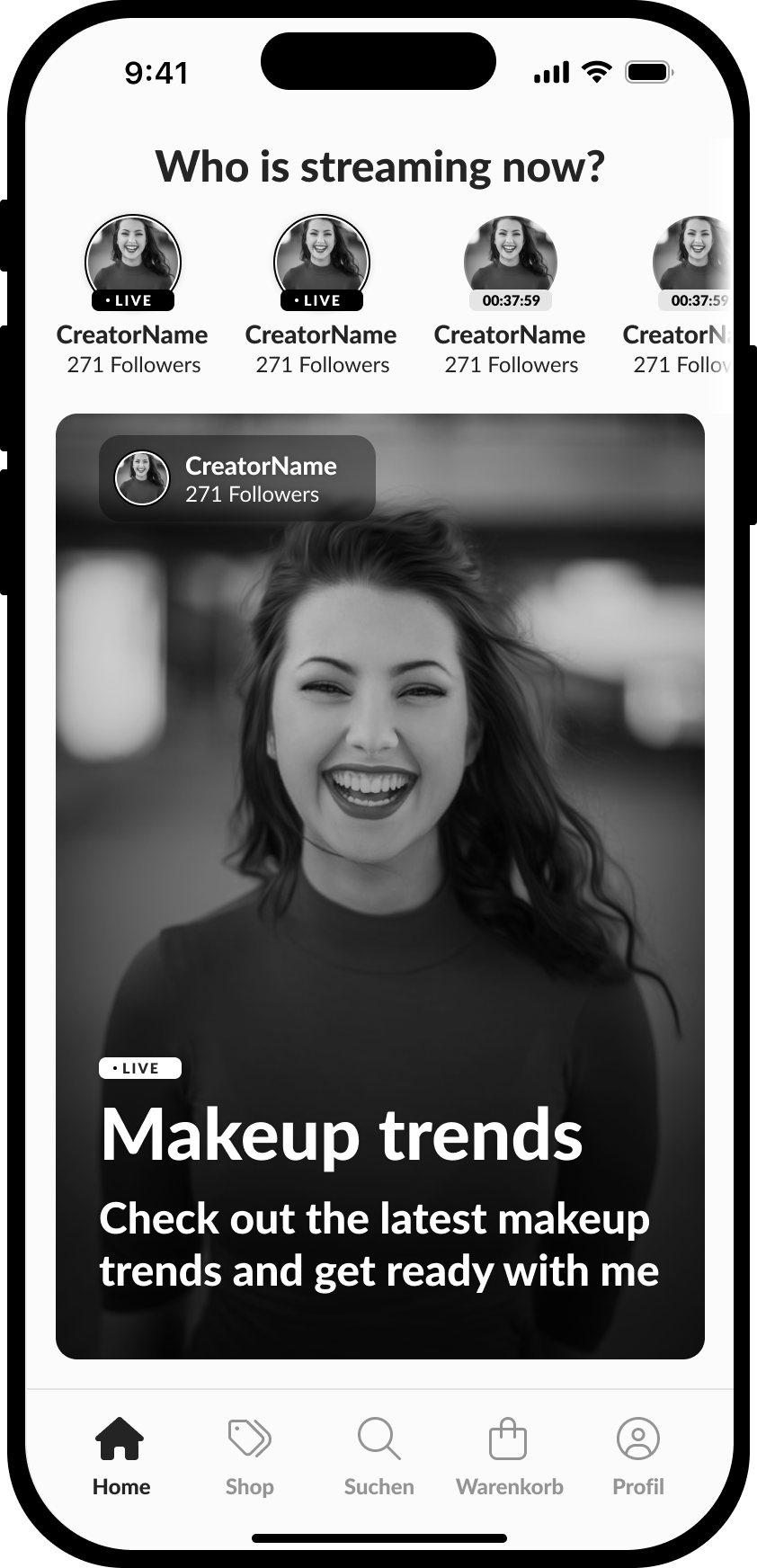
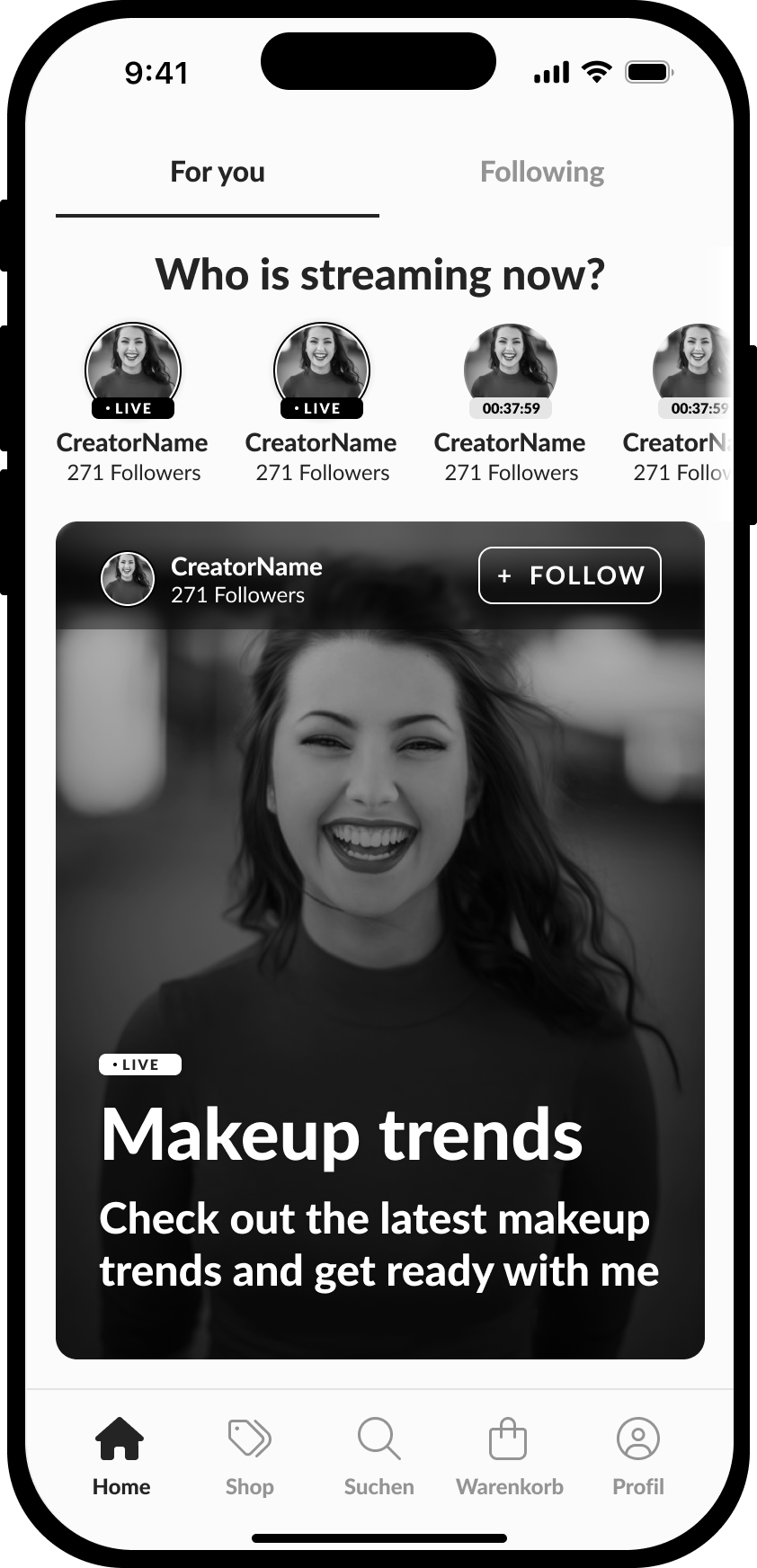
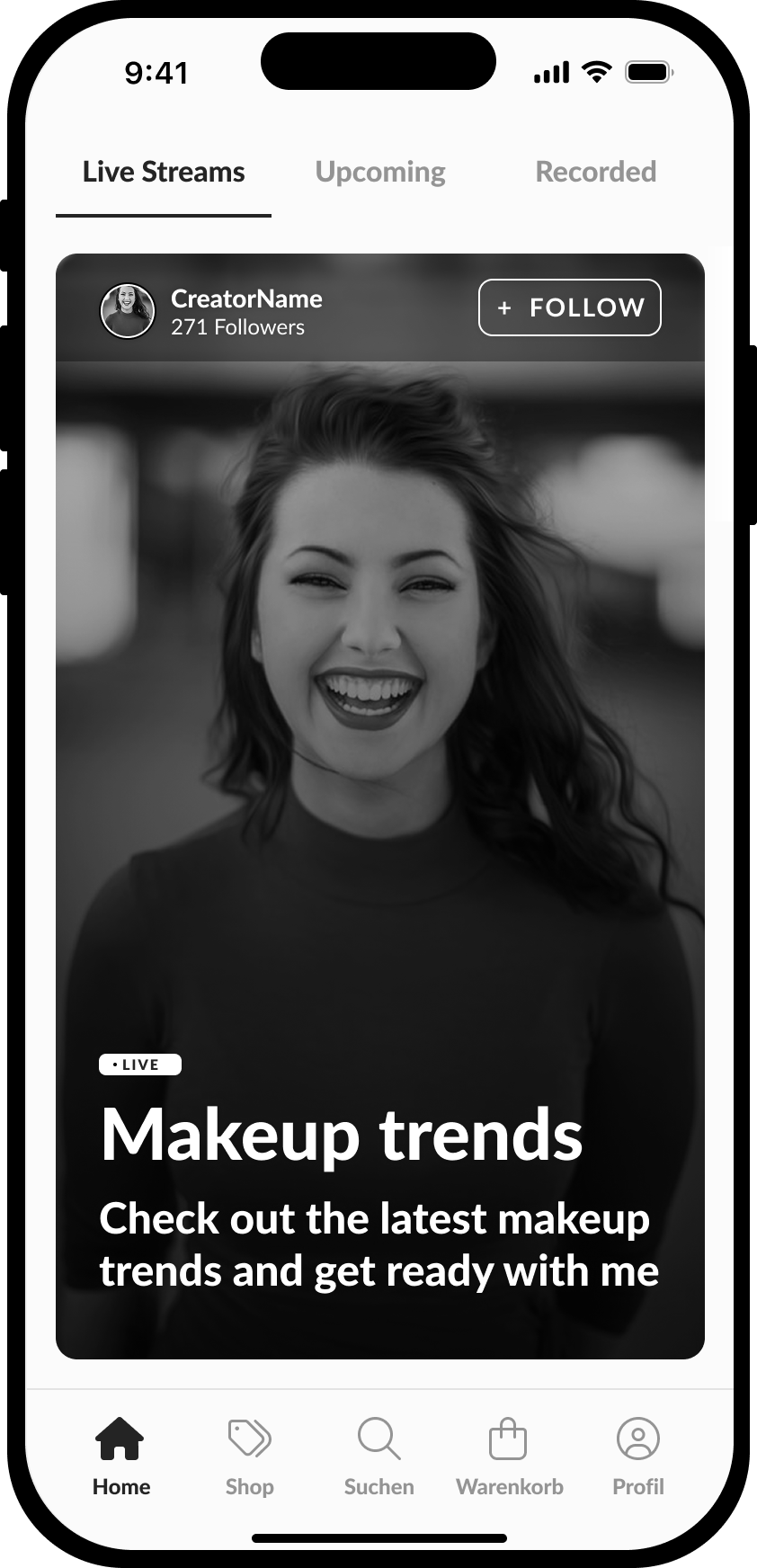
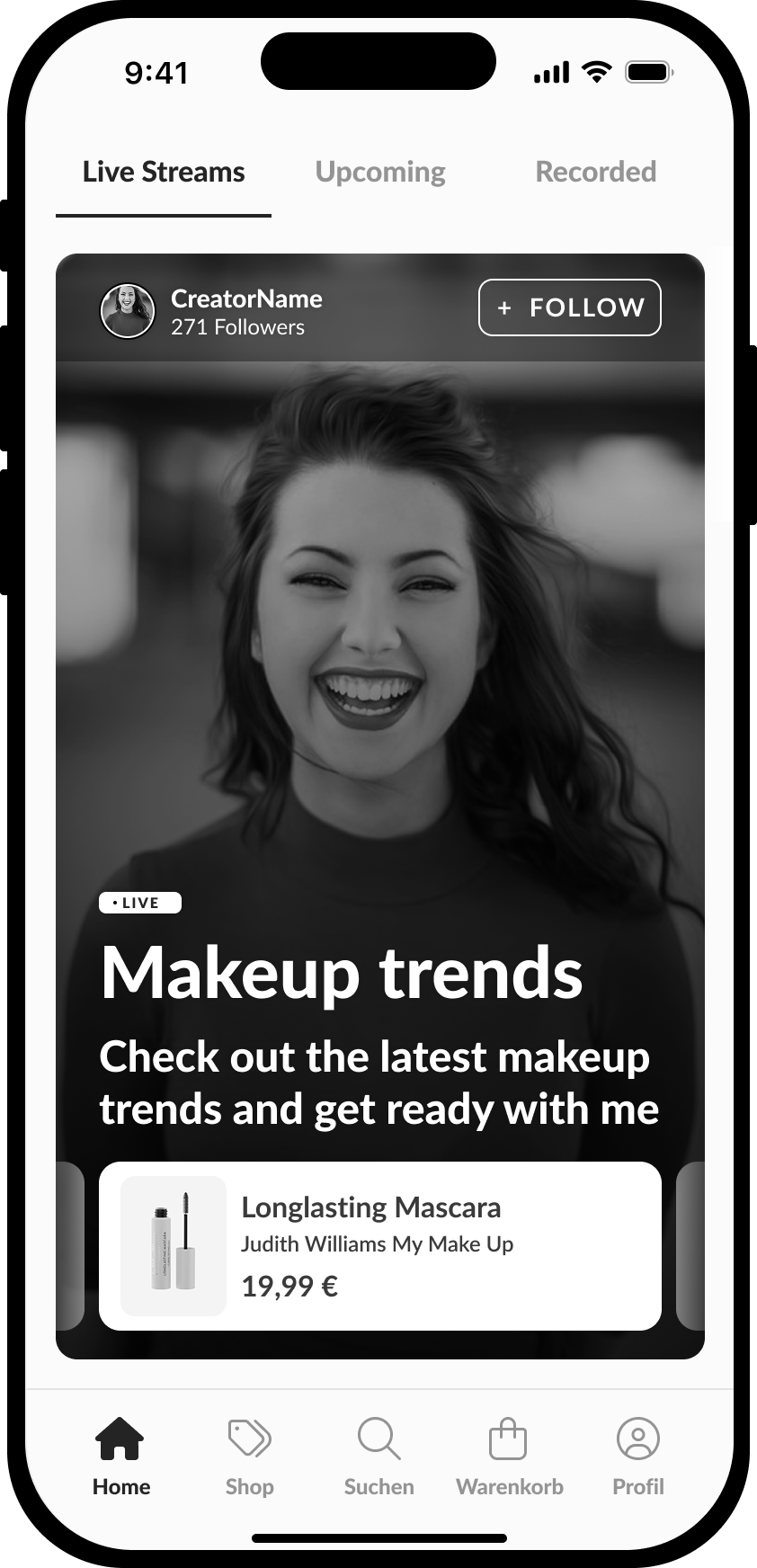
Four iterations of the HELLO homepage: from a simple stream list, to a tab-based structure, to a direct entry point into shoppable products.
My direct contribution: hands-on designer
Discovery + Conception + V1
- Sole designer from day 0: discovery, concept, and every screen of V1
- Prototype-tested the creator discovery loop with real users
- Built the scenario and trade-off concepts that won C-level approval
- Owned the build vs buy recommendation for the livestream player
Team & collaboration
Scale + Post-launch
- Set design direction across 3 teams: consumer app, creator app, partner portal
- Owned cross-team trade-offs and kept the highest-risk flows on my own desk
- Ran weekly critique and quality gates to keep one design language across all three products
- Tracked follow rate, stream frequency, and return visits as the team's success metrics
Duration: 2020 to 2024. Products: consumer app, creator streaming and academy app, service partner management app.
Impact
I led the design of HELLO, which scaled to:
The Problem
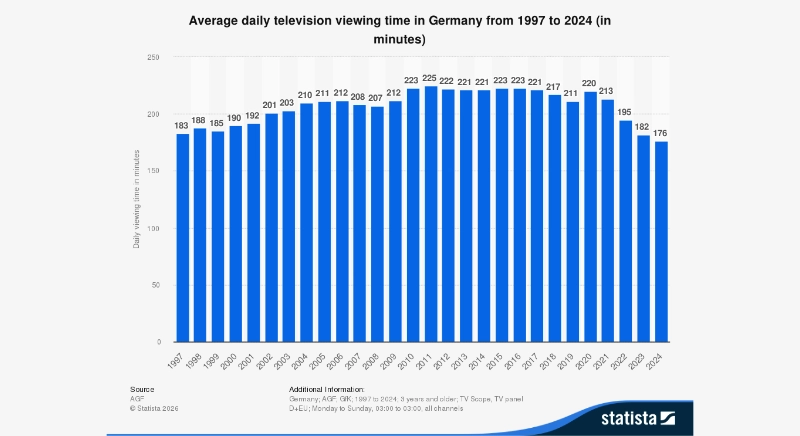
HSE relied heavily on teleshopping, serving a loyal but aging audience. TV viewing was declining, younger audiences discovered products via creators, and HSE's web and app were conversion-focused, not engagement-focused.
The question was simple: could we translate live selling into a digital-native product that drives repeat usage without damaging the core business?
The Hypothesis
If we combined creator-led entertainment with clear commerce intent, users would build habits around specific creators and return for their streams.
Two competing assumptions shaped early decisions. The first: that content volume alone would drive return behavior. The second: that HSE's existing audience wanted product-first browsing, not creator-led entertainment. Both turned out to be partially wrong. Users returned for creators they trusted, not for content in general, and not for product discovery. That finding reshaped what we optimized for: follow became the metric, not time-in-app.
How I Led
This project had two distinct modes. Pre-launch, I worked as the sole designer: individual contributor, hands-on, accountable for every pixel and decision. Post-launch, I shifted to design lead across three product teams.
Pre-launch: hands-on design
- Information architecture and navigation for the consumer app
- Core UI for V1: onboarding, home feed, creator profile, livestream player, checkout integration
- User research and prototype testing to validate navigation and creator discovery
- Scenario-based concepts and trade-off decks for board approval
- Build vs buy evaluation and recommendation for the livestream player
- Design system foundations for HELLO: tokens, components, spacing
Post-launch: led the team
- Set design direction and strategy across 3 product teams
- Aligned Product, Engineering, and senior stakeholders on priorities
- Ran weekly critique cadence and quality gates across all three teams
- Stayed hands-on in high-risk flows: player evolution, follow redesign, creator onboarding
- Tracked adoption, engagement, and retention signals: follow rate, stream completions, and return visits
Key Decisions
1. Recorded replays instead of a delayed launch
Early livestream supply was limited. Empty sessions kill first-time experience. Two options were on the table: delay the launch until creator supply was higher, or fill gaps with recorded replays. We chose replays. Delaying would have pushed the learning timeline back by months with no user data. Replays kept the experience usable while supply ramped up, and let us learn which content types users returned for on their own.
2. Follow as the retention metric, not repeat purchase
The early assumption was that repeat purchase would be the retention signal. The data said otherwise. Users who followed at least one creator were 2.3 times more likely to return than users who bought but did not follow. That finding reframed the product. We were not optimizing for conversion rate; we were optimizing for habit. We redesigned creator profiles, added follow entry points at every logical moment in the journey, and made follow the primary metric the team reported against.
3. Livestream player evolution, build vs buy
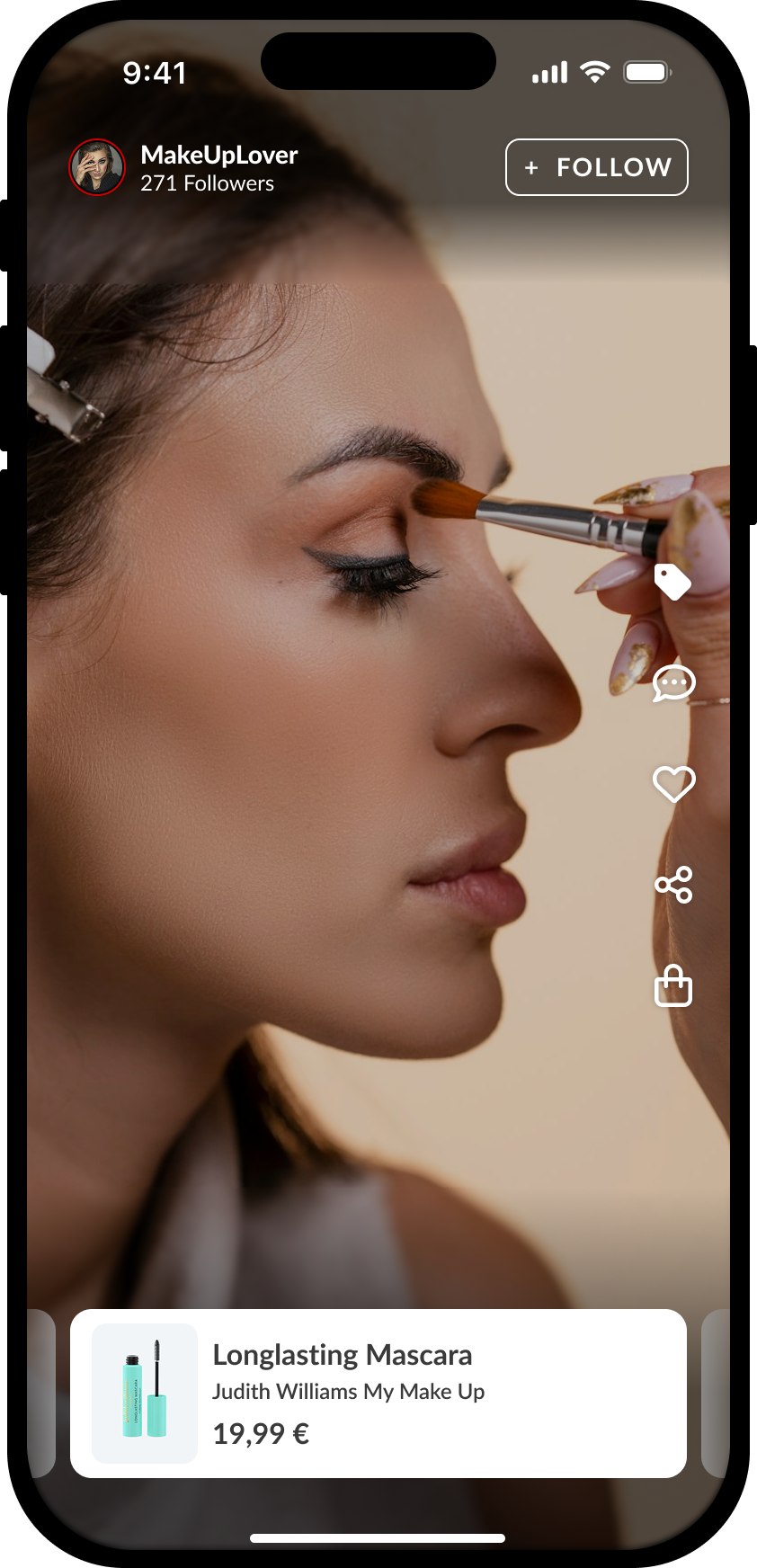
We launched with a third-party player to learn fast: development started in early 2022, and the app was live in under 7 months. Buying first meant we tested real demand before betting months of engineering on an unproven behavior. Once demand was validated, we built a custom player to own the moments that mattered: performance, multiple products per stream, vouchers, and follow inside the player.
How I Measured Success
Follow was the leading indicator. It predicted return behavior better than purchase did, so the funnel started there.
- Adoption: users who follow at least one creator
- Engagement: time spent, streams watched, interactions
- Retention: return rate, split by followers versus non-followers
- Supply: active creators and livestream hours
Outcome
HELLO proved the behavioral loop it was built to test. Users who followed creators returned at 2.3 times the rate of those who did not.
The brand was discontinued in early 2024. Marketing investment and assortment breadth did not scale to match what the product required. HSE's brand perception set a ceiling on how far creator-led expectations could stretch. Leadership integrated the strongest features into the core HSE platforms.
The capability outlived the brand. Inside hse.de, the social commerce feed reached a 4/5 user rating, and traffic to the feed page grew by 760%.
Reflection
The behavioral loop worked. The commercial ecosystem around it did not scale in time. Those are two different problems, and only one of them was mine to own.
What I would do differently: treat the commercial commitments as a launch condition, not a post-launch assumption. A creator-led platform needs creator supply, category depth, and brand positioning to match the product experience. We validated the UX. We did not validate whether the rest of the business would follow. I should have named those dependencies explicitly in the C-level approval and forced a decision on them before we scaled.
The discontinuation was not a design failure. It was an ecosystem failure at scale. Naming that risk earlier, and making it a blocking condition rather than a stated hope, is what I would change.
Takeaway
A 0-to-1 product teaches you what you can and cannot control. I could design a behavioral loop that worked. I could not design the commercial ecosystem that needed to surround it. On my next zero to one, that ecosystem is a launch condition, not a hope.